Table of Contents
Introduction
In today’s fast-paced manufacturing landscape, companies are constantly seeking ways to optimize operations, reduce costs, and enhance productivity. One intriguing proposition gaining traction is whether a single multi-functional production line can effectively replace three older, specialized machines. This concept challenges traditional setups by integrating multiple processes into one streamlined system. As industries evolve with advancements in automation and robotics, the potential for such consolidation promises significant efficiencies. However, it also raises valid concerns about reliability, flexibility, and upfront investment. This article explores the feasibility of this shift, weighing benefits against challenges, and examines real-world implications to provide a balanced perspective.
Understanding Multi-Functional Production Lines
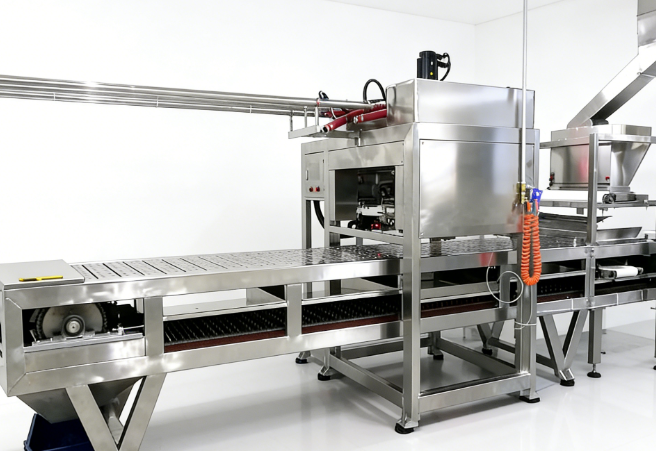
Multi-functional production lines represent a leap forward in manufacturing technology. Unlike traditional setups where separate machines handle individual tasks—such as cutting, forming, and assembly—these lines incorporate modular components that perform multiple operations sequentially or simultaneously. Equipped with advanced sensors, AI-driven controls, and programmable logic controllers (PLCs), they adapt to varying product specifications with minimal reconfiguration. This integration stems from Industry 4.0 principles, emphasizing smart factories where interconnected systems communicate in real-time.
Transitioning to such a line means evaluating not just technical specs but also operational workflows. Older machines, often legacy equipment from decades past, excel in niche roles but suffer from inefficiencies like high downtime for changeovers and fragmented quality control. By contrast, a multi-functional line centralizes these functions, potentially slashing production cycles. To illustrate, consider a bottling plant: three machines might handle filling, capping, and labeling separately, whereas a single line could manage all three in one pass.
Key Benefits of Multi-Functional Lines
The allure of replacing three machines with one lies in multifaceted advantages that extend beyond mere space savings. These systems deliver measurable gains in several critical areas. For instance:
- Cost Efficiency: Reduced labor needs and lower energy consumption, often cutting operational expenses by 30-50%.
- Space Optimization: A single footprint minimizes factory real estate, freeing up areas for expansion or storage.
- Enhanced Throughput: Continuous flow eliminates bottlenecks, boosting output rates significantly.
- Improved Quality Control: Centralized monitoring ensures consistency across processes, reducing defects.
- Scalability: Modular designs allow easy upgrades without overhauling the entire system.
Furthermore, maintenance becomes proactive rather than reactive, as predictive analytics forecast issues before they escalate. These benefits compound over time, making the initial switch appealing for high-volume producers.
Comparative Analysis
To assess viability, a direct comparison between legacy tri-machine setups and modern multi-functional lines is essential. The following table highlights key metrics based on industry averages from recent studies by manufacturing consultancies.
| Metric | Three Older Machines | One Multi-Functional Line |
|---|---|---|
| Footprint (sq m) | 150 | 50 |
| Daily Output (units) | 10,000 | 18,000 |
| Energy Cost (kWh/year) | 500,000 | 300,000 |
| Maintenance Downtime (hours/year) | 1,200 | 400 |
| Initial Investment ($) | 500,000 (replacement) | 800,000 (new) |
| ROI Timeline (years) | N/A | 2-3 |
As the table demonstrates, while upfront costs are higher for the multi-functional line, long-term savings and productivity gains quickly offset this. Moving forward, it’s crucial to consider potential hurdles that could undermine these advantages.
Potential Challenges and Mitigation Strategies
Despite compelling upsides, adopting a multi-functional line isn’t without risks. One primary concern is single-point failure: if the integrated system malfunctions, the entire production halts, unlike tri-machine setups where issues can be isolated. Additionally, the learning curve for operators demands substantial training, potentially disrupting short-term output. Flexibility poses another issue; older machines might swap tasks easily, whereas retooling a multi-functional line could require specialized engineering.
Initial capital outlay also deters smaller firms, compounded by integration complexities with existing infrastructure. However, mitigation strategies abound. Partnering with vendors for pilot programs tests feasibility at reduced risk. Investing in redundant modules enhances reliability, and phased implementation—starting with one line segment—eases transition. Moreover, government incentives for automation in many regions can bridge financial gaps. Addressing these proactively ensures smoother adoption.
Real-World Case Studies
Practical examples underscore the transformative power of multi-functional lines. A leading automotive parts manufacturer in Germany replaced three stamping, welding, and inspection machines with a single Fanuc-integrated line. Post-implementation, throughput rose 60%, and defect rates dropped 40%, recouping costs within 18 months. Similarly, a U.S. pharmaceutical firm consolidated packaging operations, achieving 35% space savings and compliance with stringent FDA standards through built-in traceability.
In the food and beverage sector, Nestlé’s adoption of a multi-functional filling line for multiple SKUs demonstrated adaptability, handling beverages and dairy interchangeably. These successes highlight that while not universal, the replacement model thrives in stable, high-volume environments. Conversely, low-variety custom shops may retain legacy systems for agility.
Conclusion
In conclusion, a single multi-functional production line can indeed replace three older machines, provided the operation aligns with its strengths in efficiency, scalability, and integration. The evidence from comparative data, listed benefits, and case studies affirm substantial advantages in cost, space, and output, tempered by strategic planning to navigate challenges like reliability and training. As manufacturing edges toward full automation, forward-thinking companies stand to gain the most by embracing this consolidation. Ultimately, the decision hinges on specific business needs, but for many, the answer is a resounding yes—one line’s versatility paves the way for tomorrow’s competitive edge.
Our Products
-

Braided Rainbow Marshmallow Ropes Production Line: Best Making Machine Factory & Supplier
-

Bulk Industrial Topping Marshmallows Production Line: Best Making Machine Factory & Supplier
-

Center-filled Fruit Jam Marshmallows Production Line: Best Making Machine Factory & Supplier
-

Chocolate Coated Marshmallow Biscuits Production Line: Best Making Machine Factory & Supplier
-

Custom Shape Die-cut Marshmallows Production Line: Best Making Machine Factory & Supplier
-
Dehydrated Crunchy Micro Marshmallows for Cereal Production Line: Best Making Machine Factory & Supplier