Table of Contents
Introduction
In the competitive confectionery industry, growing brands face the challenge of scaling production without compromising quality or profitability. A high-speed marshmallow production line represents a significant investment designed to boost output, streamline operations, and meet surging demand. But what is the real return on investment (ROI) for such equipment? This article delves into the financial realities, operational advantages, and strategic considerations, providing a comprehensive analysis to help brands evaluate whether a high-speed marshmallow line aligns with their growth objectives. By examining costs, benefits, and real-world metrics, we uncover the true value proposition.
Understanding High-Speed Marshmallow Lines
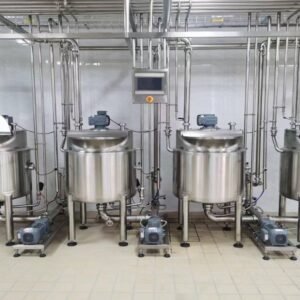
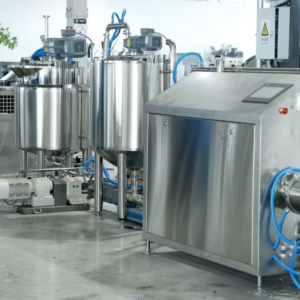
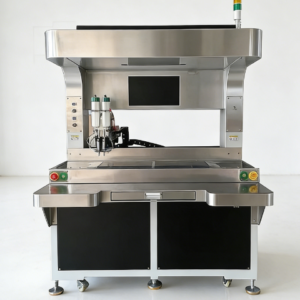
A high-speed marshmallow line is an automated manufacturing system capable of producing thousands of marshmallows per hour, far surpassing traditional batch methods. These lines integrate advanced machinery for mixing, aerating, extruding, cooling, and packaging, often achieving speeds of up to 20,000 pieces per minute. For growing brands, this technology shifts production from labor-intensive processes to efficient, continuous operations. As demand escalates, the ability to scale rapidly becomes crucial, transitioning from seasonal peaks to year-round supply. This foundational shift sets the stage for evaluating ROI, where upfront capital meets long-term gains.
Initial Investment Breakdown
The upfront costs of a high-speed marshmallow line can be substantial, typically ranging from $500,000 to $2 million depending on capacity, automation level, and customization. These expenses include the machinery itself, installation, facility modifications, and initial training. To provide clarity, consider the following table outlining a typical cost structure for a mid-sized line producing 10,000 kg per shift:
| Cost Category | Estimated Amount (USD) | Percentage of Total |
|---|---|---|
| Machinery Purchase | 1,200,000 | 70% |
| Installation & Setup | 200,000 | 12% |
| Facility Upgrades | 150,000 | 9% |
| Training & Commissioning | 100,000 | 6% |
| Initial Raw Materials | 50,000 | 3% |
This breakdown highlights that machinery dominates the budget, yet modular designs allow for phased investments. Financing options, such as leasing or government grants for food tech, can mitigate immediate cash flow impacts. Moving beyond costs, the focus shifts to how these lines deliver efficiency gains that directly influence ROI.
Operational Efficiencies Gained
High-speed lines revolutionize daily operations by reducing labor needs, minimizing waste, and ensuring product consistency. Where manual lines might yield 2-3 tons daily with high variability, automated systems consistently hit 10-15 tons while cutting downtime. Key benefits include:
- Reduced labor costs by up to 60%, as fewer operators oversee automated processes.
- Lower material waste through precise dosing and aeration control, saving 10-15% on ingredients.
- Enhanced food safety via hygienic, enclosed designs compliant with FDA and HACCP standards.
- Shorter production cycles, enabling faster response to market trends like gourmet or vegan marshmallows.
- Energy efficiency, with modern lines consuming 20-30% less power through optimized heating and cooling.
These efficiencies compound over time, transitioning brands from cost centers to profit drivers. For instance, a growing brand previously outsourcing production can repatriate operations, retaining margins previously lost to third parties.
Revenue and Market Expansion Opportunities
The true ROI emerges in revenue uplift. With higher output, brands access larger retailers, private labels, and export markets. A line producing 5 million units monthly can generate $3-5 million in annual sales at $0.50-1.00 per unit wholesale, assuming 40-50% gross margins post-costs. Scalability supports product diversification—introducing twists like flavored, organic, or low-sugar variants—capturing premium pricing. Moreover, just-in-time production reduces inventory holding costs by 25%, freeing capital for marketing. As one brand executive noted, “The line didn’t just increase volume; it unlocked new customer segments we couldn’t serve before.” This revenue trajectory, combined with efficiencies, forms the numerator in ROI calculations.
ROI Calculation and Realistic Projections
Calculating ROI involves the formula: (Net Profit from Line – Investment Cost) / Investment Cost x 100. For a $1.5 million line, assume annual savings of $400,000 (labor, waste) and revenue gains of $2 million at 45% margin ($900,000 profit). Net annual benefit: $1.3 million. Payback period: under 15 months, with ROI exceeding 85% in year one, scaling to 200%+ by year three. Sensitivity analysis accounts for variables like raw material fluctuations (sugar prices up 10%) or utilization rates (80% average). Tools like NPV (Net Present Value) at 10% discount rate often yield positive figures over five years, confirming viability for brands with $10M+ revenue.
However, success hinges on demand forecasting and maintenance. Neglecting upkeep can erode gains, emphasizing proactive strategies like predictive analytics for machinery health.
Conclusion
In summary, the real ROI of a high-speed marshmallow line for a growing brand transcends mere production speed—it’s a catalyst for sustainable profitability. By balancing $1-2 million investments against $1M+ annual returns through efficiencies, revenue growth, and market agility, brands achieve paybacks in 1-2 years and ROIs surpassing 100%. For those poised for expansion, this technology isn’t an expense but a strategic imperative. Prospective investors should conduct site-specific audits and pilot runs to tailor projections, ensuring the sweet returns match their vision.